🧠 Overview
Temporal migraines are caused by compression of the auriculotemporal nerve, typically by the superficial temporal artery or surrounding fascia. This nerve runs alongside the temple area just above and in front of the ear. Compression of the zygomaticotemporal nerve can also cause temporal migraine. This nerve runs along the lateral aspect of the eye.
🎯 Affected Nerve:
Auriculotemporal and Zygomaticotemporal Nerves
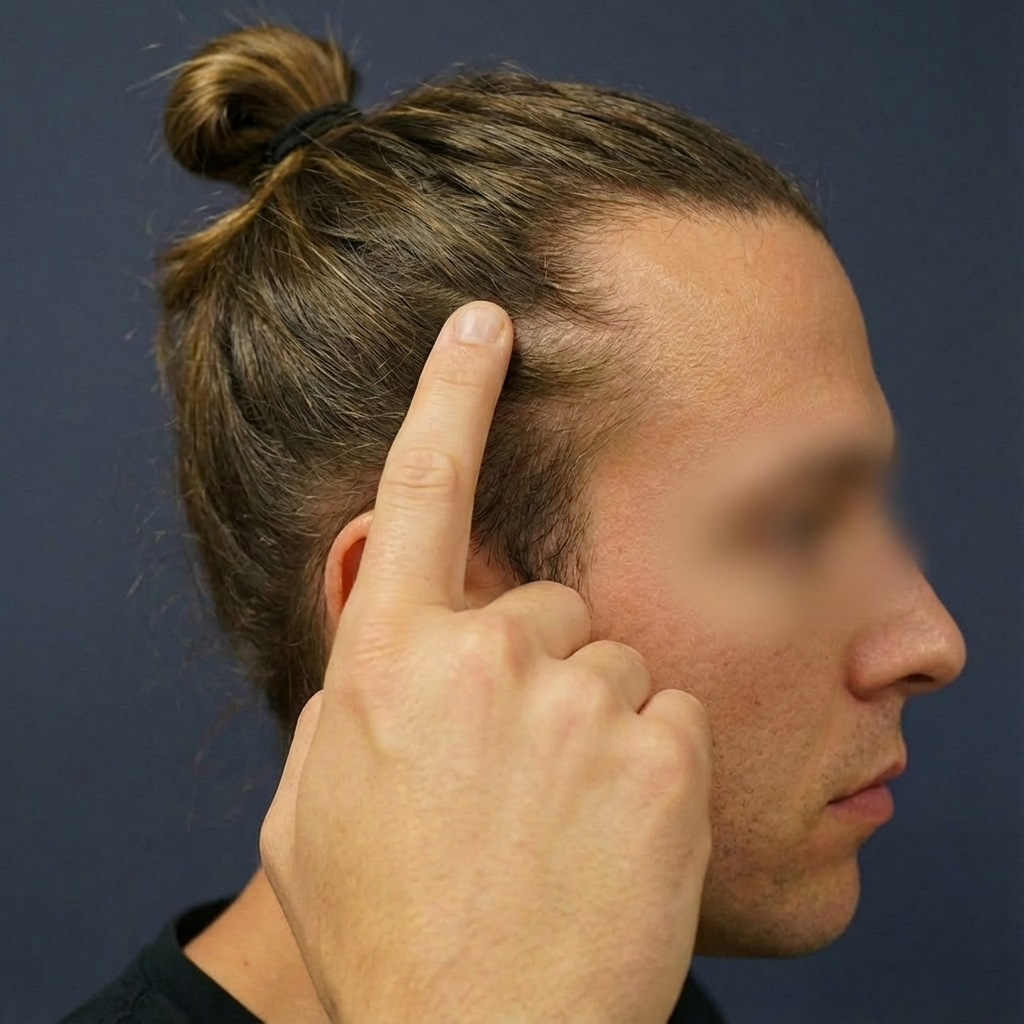
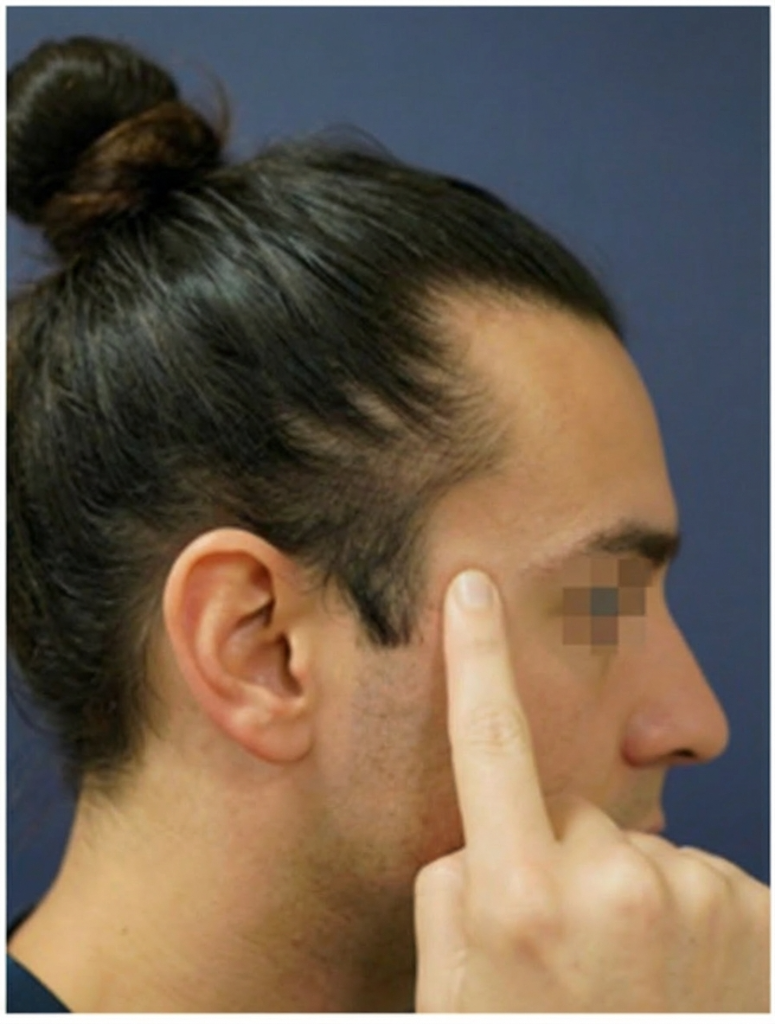
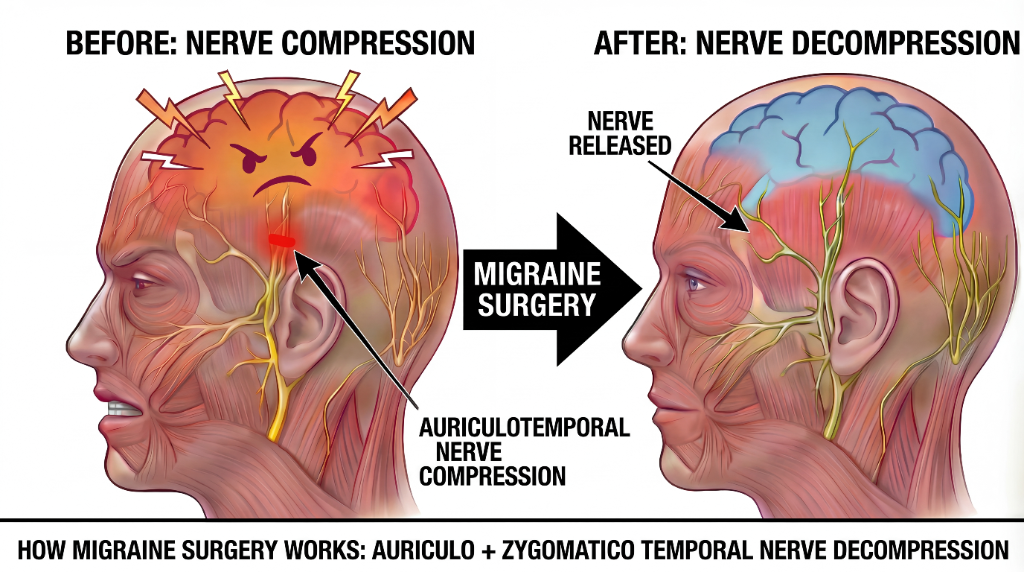
Releasing the nerves at the temple
💭 Headache Characteristics
📍 Pain Location
Pain originates at the temple area, approximately 2-3 cm above the ear. It may extend forward toward the eye or backward toward the ear.
⚡ Pain Character
Often described as a severe throbbing or pulsating pain that follows the heartbeat. Patients may feel the temporal artery pulsating under the skin during attacks.
🌊 Pain Migration Pattern
The pain typically starts at one temple and may spread across the side of the head. Some patients experience bilateral temporal pain, though it usually begins on one side.
✨ Pain Quality
Intense pulsating pain during acute episodes. The quality is often rhythmic, matching the pulse. Between attacks, there may be tenderness to touch in the temple area.
🔬 How we confirm it: the numbing test
We place a small injection of local anaesthetic just above the ear, where the nerve runs. If your pain fades within about 10 minutes, the nerve at your temple is your trigger. The test is quick and almost painless.
💡 Important: We never recommend surgery without this test, your trust matters too much. If the numbing injection relieves your pain, surgery is very likely to help you. If it does not, we will tell you honestly and keep looking for answers with you.
⚕️ What the operation involves
Through a small incision hidden in the hairline above the ear, Dr. Sarhane gently separates the nerve from the small artery and tight bands that are pressing on it. The operation takes about 45-60 minutes, under general or local anaesthesia as you prefer, and you go home the same day. The incision heals within the hair and is barely visible. Nothing goes inside the skull.
📊 What you can realistically expect
💊 Pain relief
Around 85-90% of patients improve significantly, typically with a 70-85% reduction in how often and how severely their attacks come.
💊 Fewer medicines
80% of patients significantly reduce their use of acute pain medications. Many find they no longer need daily preventive medications.
🏥 Getting back to your life
Most people are back to normal activities within 5-7 days. The skin around the incision can feel a little numb for a few weeks to months, this is normal and settles on its own.
⏱️ What the first weeks usually look like:
- First few days: rest at home, simple painkillers if needed. Most people describe soreness rather than pain.
- First week: light activities and desk work for most trigger zones.
- Weeks 2-4: gradually back to exercise and your normal routine.
- Months 1-6: the nerve settles and your migraines improve step by step. Our nursing team stays in touch with you throughout, you are never on your own.