🧠 Overview
Frontal migraines originate from compression of the supraorbital and supratrochlear nerves as they exit through small bony openings above the eyebrows. They can also get compressed by the frowning muscles. These nerves provide sensation to the forehead and front of the scalp.
🎯 Affected Nerve:
Supraorbital and Supratrochlear Nerves
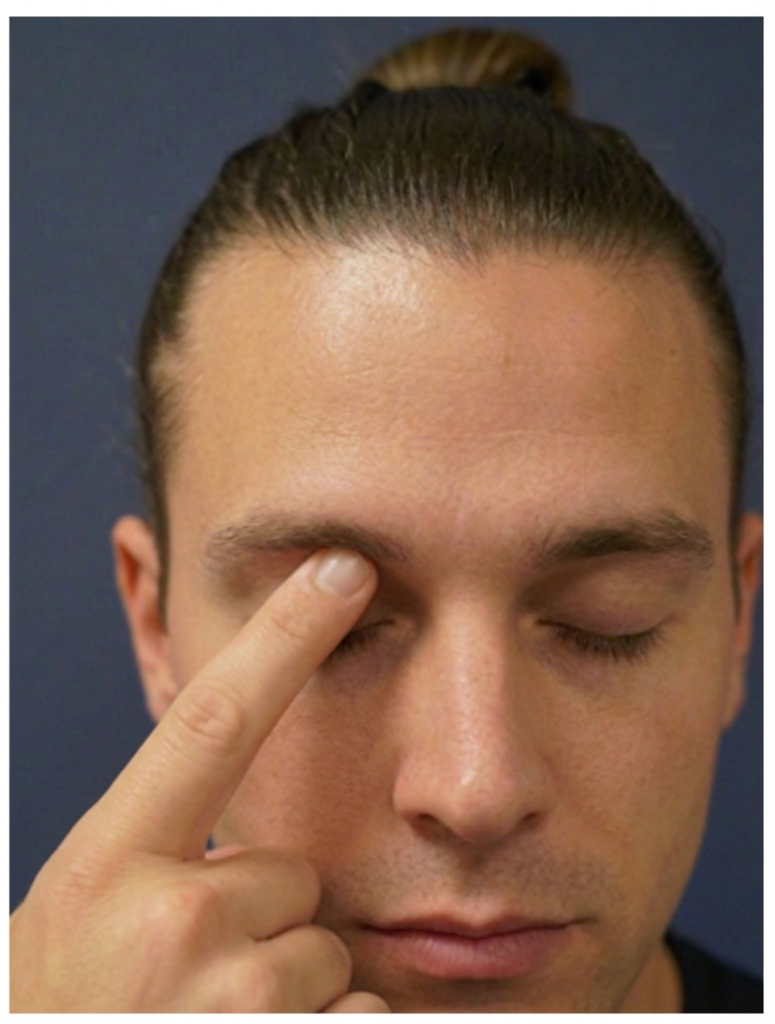
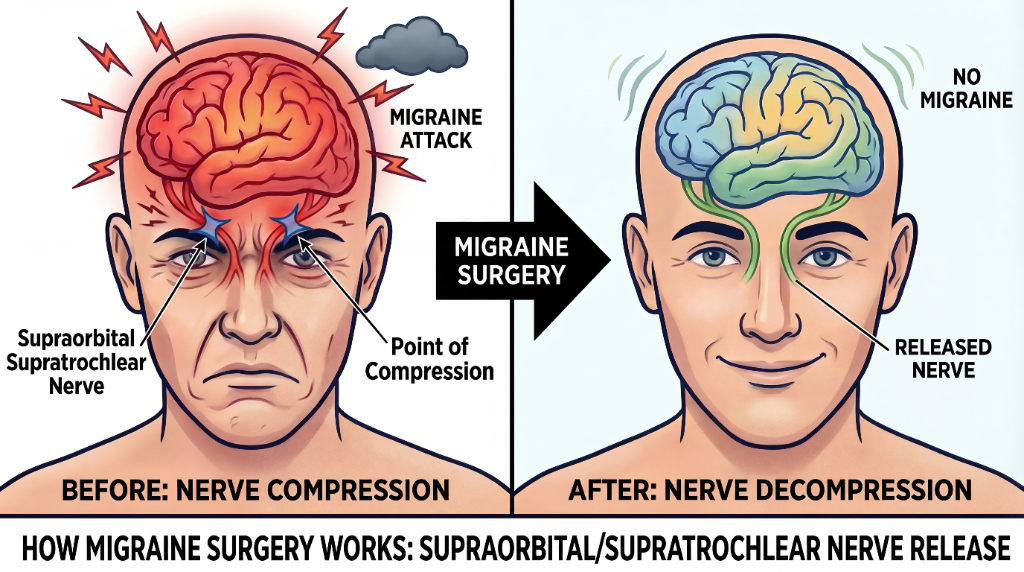
Releasing the nerves above the eyebrow
💭 Headache Characteristics
📍 Pain Location
Pain starts just above the eyebrow and radiates upward across the forehead, often extending to the top of the head.
⚡ Pain Character
Typically described as a sharp, stabbing, or throbbing pain. Patients often report pressure or tightness above the eyes that intensifies with eye movement or frowning.
🌊 Pain Migration Pattern
The pain begins at a specific point above the eyebrow and spreads horizontally across the forehead, sometimes reaching the temples. It may also radiate vertically toward the hairline.
✨ Pain Quality
Sharp, piercing quality during acute episodes. Between attacks, patients may experience a dull ache or pressure sensation.
🔬 How we confirm it: the numbing test
At your consultation, we place a tiny injection of local anaesthetic (the same numbing medicine a dentist uses) just above the eyebrow, exactly where your pain starts. If your headache melts away within 10-15 minutes, we have found your trigger. It takes a few minutes and tells us with good confidence that surgery will help you.
💡 Important: We never recommend surgery without this test, your trust matters too much. If the numbing injection relieves your pain, surgery is very likely to help you. If it does not, we will tell you honestly and keep looking for answers with you.
⚕️ What the operation involves
The operation is done through a small incision hidden in the natural crease of your upper eyelid, the same approach used in cosmetic eyelid surgery, so the scar is practically invisible. Dr. Sarhane gently frees the nerves from the small frowning muscle and any tight bands or blood vessels pressing on them. It takes 30-45 minutes, under general or local anaesthesia as you prefer, and you go home the same day. Nothing goes inside the skull.
📊 What you can realistically expect
💊 Pain relief
Around 87-92% of patients improve significantly. Most describe a 60-80% drop in how often and how badly their headaches come, with the full benefit clear by 3-6 months as the nerve settles.
💊 Fewer medicines
Over 75% of patients reduce their medication use by at least 50%. Many are able to discontinue preventive medications entirely.
🏥 Getting back to your life
Most people are back at desk work within 3-5 days. Expect some mild swelling or bruising above the eyebrow for 1-2 weeks, it looks worse than it feels. Full recovery is 4-6 weeks.
⏱️ What the first weeks usually look like:
- First few days: rest at home, simple painkillers if needed. Most people describe soreness rather than pain.
- First week: light activities and desk work for most trigger zones.
- Weeks 2-4: gradually back to exercise and your normal routine.
- Months 1-6: the nerve settles and your migraines improve step by step. Our nursing team stays in touch with you throughout, you are never on your own.